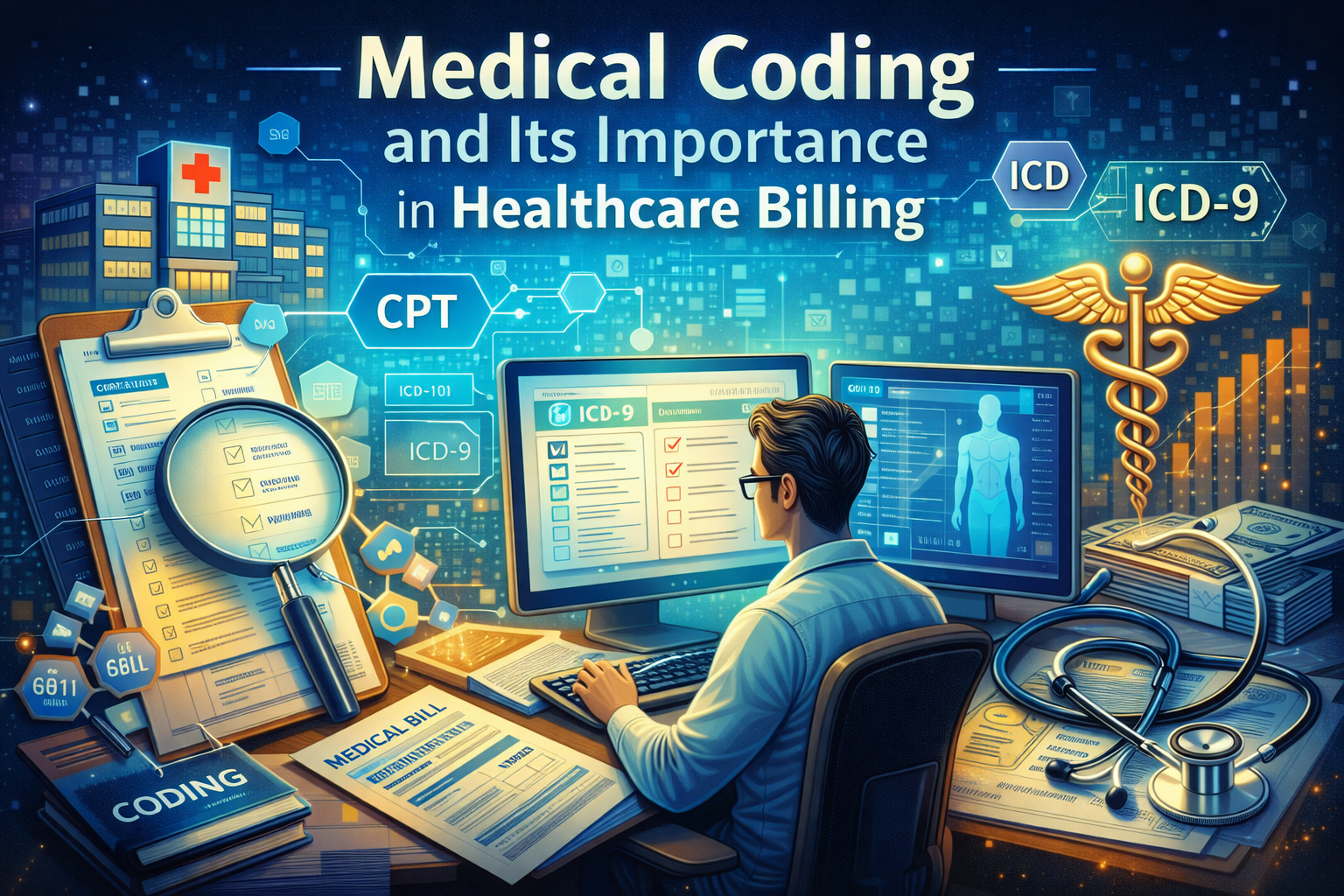
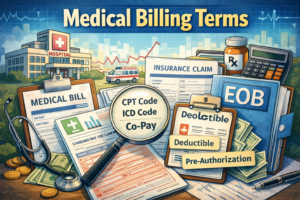
Medical coding is a cornerstone of the medical billing process and revenue cycle management (RCM). It transforms healthcare services into standardized codes that insurance companies can understand and reimburse. Without accurate coding, claims can be denied, delayed, or underpaid, which negatively impacts a healthcare provider’s revenue and compliance standing.
Medical coding is not just a clerical task; it is a specialized skill that ensures financial accuracy, regulatory compliance, and proper patient documentation.
ICD-10 vs CPT Codes: Understanding the Difference
Medical coding primarily relies on ICD-10 codes and CPT codes. While these systems work together, they serve very different purposes:
- ICD-10 Codes (International Classification of Diseases, Tenth Revision)
- Explain why a patient received care.
- Provide detailed information about diagnoses, symptoms, or injuries.
- Support medical necessity, a requirement insurance companies use to approve claims.
- Example: S52.521A — “Torus fracture of lower end of right radius, initial encounter.” Using the wrong ICD-10 code can lead to claim denial because the payer may consider the service unnecessary.
- CPT Codes (Current Procedural Terminology)
- Describe what services or procedures were performed.
- Include office visits, surgeries, diagnostic tests, and lab services.
- Directly affect reimbursement amounts.
- Example: 99214 — “Established patient office visit, moderate complexity.” Incorrect CPT codes can result in underpayment or claim rejection.
Key Takeaway: ICD-10 codes justify the treatment, while CPT codes describe the actual care delivered. Both must be accurate to create a clean claim.
Why Accurate Medical Coding Matters
Accurate medical coding has a significant impact on healthcare operations. Its importance can be understood through these factors:
- Ensures Timely and Correct Reimbursement
Accurate coding prevents claim denials and delays. Clean, precise claims are processed faster, improving cash flow and reducing administrative burden. - Maintains Compliance and Reduces Legal Risks
Coding errors can trigger audits or even allegations of fraud. Adhering to coding guidelines from CMS, AMA, and payer-specific rules protects the provider legally and financially. - Supports Data Reporting and Analytics
Payers and healthcare organizations rely on coded data for population health tracking, disease prevalence studies, and quality reporting. Incorrect coding distorts insights and can impact healthcare policy decisions. - Strengthens Patient Trust and Communication
When claims are coded accurately, patients receive correct bills and clear explanations of benefits, improving satisfaction and reducing disputes.
Common Medical Coding Mistakes and How to Avoid Them
Even experienced coders can make errors. Recognizing common mistakes helps billing teams prevent denials and maximize revenue. Some key coding errors include:
- Incorrect ICD-10 Codes
Selecting a code that does not fully describe the diagnosis can cause denials. Coders must ensure the code matches the provider’s documentation. - Upcoding and Undercoding
Upcoding occurs when a coder assigns a higher-level CPT code than justified, potentially triggering audits. Undercoding happens when a lower-level code is used, leading to lost revenue. Both affect compliance and reimbursement. - Missing or Incorrect CPT Modifiers
Modifiers provide additional context about a procedure, such as whether it was performed on the left or right side or as a separate service. Missing modifiers often cause partial payment or denial. - Incomplete or Inaccurate Documentation
Claims must reflect the provider’s notes. Missing details like procedure duration, service complexity, or treatment context lead to claim rejections. - Using Outdated Codes
Coding systems are updated annually. Using old codes can result in automatic denials, requiring resubmission and delaying payment.
Conclusion: Why Mastering Medical Coding Is Essential
Medical coding is not just about translating services into numbers — it is the foundation of accurate billing and efficient revenue cycle management. By mastering ICD-10 and CPT codes, maintaining accuracy, and avoiding common mistakes, healthcare providers and billing staff can ensure timely reimbursement, reduce denials, and maintain compliance with regulations.
Proper coding also supports data analytics, reporting, and overall patient satisfaction, making it an essential skill for any medical billing professional. For practices aiming to improve financial performance, clean claims and accurate coding are non-negotiable.