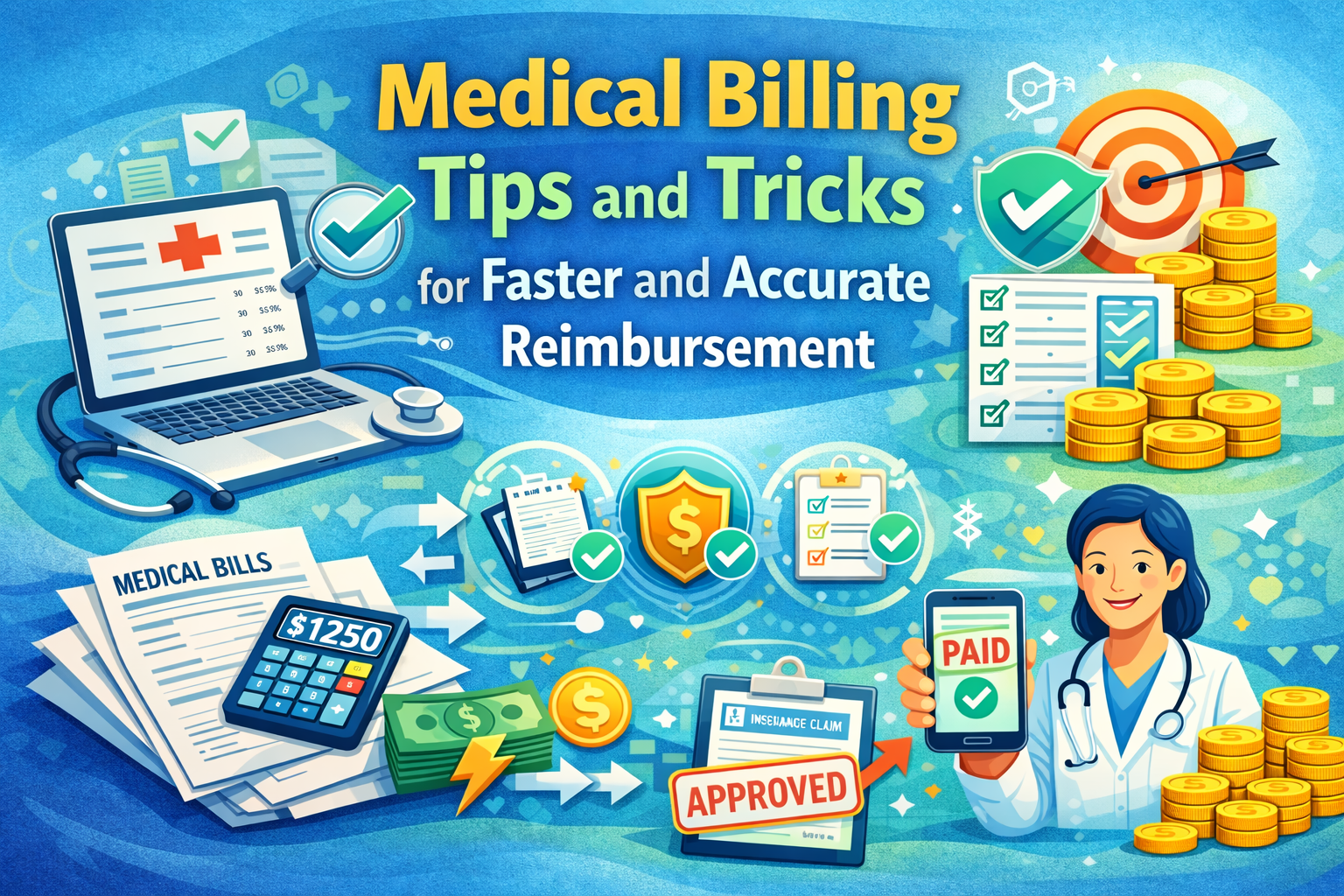
Medical billing is a critical part of the healthcare revenue cycle. In the US healthcare system, even small billing errors can lead to delayed payments, claim denials, and revenue loss. By following proven medical billing tips and best practices, healthcare providers and billing professionals can improve accuracy, reduce denials, and ensure faster reimbursement.
Below are essential medical billing strategies that support efficient billing operations and stronger financial performance.
Understand the Complete Medical Billing Workflow
Medical billing follows a structured process that begins with patient registration and ends with payment posting. Key stages include insurance verification, coding, claim submission, and denial management. Understanding how each step connects helps billing teams identify errors early and prevent reimbursement delays. A strong workflow improves clean claim rates and overall revenue cycle efficiency.
Ensure Accurate Patient Registration
Accurate patient registration is the foundation of successful billing. Errors in demographics or insurance details are among the most common causes of claim rejections in the US. Verifying patient information at the front end reduces corrections, minimizes denials, and ensures smoother claim processing.
Verify Insurance Before Every Visit
Insurance verification confirms eligibility, coverage details, deductibles, and authorization requirements. Since insurance plans change frequently, verifying coverage before each visit is essential. Proper verification protects providers from unpaid claims and helps patients understand their financial responsibility upfront.
Submit Clean Claims for Faster Payments
A clean claim is submitted correctly the first time, with accurate data and proper coding. Clean claims are processed faster by insurance payers and significantly reduce administrative rework. Prioritizing clean claim submission improves cash flow and lowers denial rates.
Follow Best Medical Coding Practices
Accurate coding using ICD-10 and CPT codes ensures claims reflect medical necessity and comply with payer guidelines. Incorrect coding can result in denials or underpayment. Staying updated with coding changes and reviewing provider documentation improves claim acceptance and compliance.
Prevent Common Billing Errors
Common billing errors include missing authorizations, incorrect payer selection, duplicate claims, and invalid codes. Regular audits, staff training, and standardized workflows help prevent these issues. Early error prevention saves time and protects revenue.
Follow Up on Unpaid Claims Consistently
Claim follow-up is essential for timely reimbursement. Insurance payers may delay or deny claims without clear communication. Tracking claim status and following up on unpaid claims ensures issues are resolved before deadlines expire.
Use Technology to Improve Billing Accuracy
Billing software, EHR systems, and claim scrubbing tools reduce manual errors and improve efficiency. Technology enables faster processing, better reporting, and improved visibility into claim performance. Modern billing operations rely on automation to maintain accuracy and scalability.
Track and Analyse Claim Denials
Denial tracking helps identify recurring issues in billing processes. By analysing denial trends, billing teams can address root causes and prevent future denials. Proactive denial management improves clean claim rates and overall financial performance.
Apply Proven Strategies to Increase Revenue
Revenue growth often comes from improving billing efficiency rather than increasing patient volume. Accurate data collection, clean claims, timely follow-ups, and denial prevention all contribute to stronger reimbursement outcomes. Effective medical billing practices support long-term financial stability.
Final Thoughts
Efficient medical billing is essential for success in the US healthcare system. By focusing on accuracy, compliance, and process improvement, healthcare providers can reduce denials, speed up reimbursements, and protect revenue. Strong billing practices create a reliable foundation for sustainable healthcare operations.