
A Complete Guide for Accurate and Faster Reimbursement

Medical billing is not simply about submitting insurance claims—it is a structured revenue process that directly affects the financial stability and growth of healthcare practices across the United States. Even small inefficiencies in billing can lead to delayed reimbursements, denied claims, compliance risks, and lost revenue. Understanding proven medical billing tips and best practices allows healthcare providers and billing professionals to streamline workflows, improve claim acceptance rates, and maintain consistent cash flow.
This guide explains the most effective medical billing strategies used by successful US healthcare organizations to ensure accuracy, efficiency, and timely reimbursement.
Understanding the Complete Medical Billing Workflow
The medical billing workflow is a comprehensive process that begins before a patient is seen and continues until full payment is received. It includes patient registration, insurance verification, charge entry, medical coding, claim submission, payment posting, and denial management. Each step relies on the accuracy of the previous one, making the entire workflow highly interconnected.
In US healthcare settings, many claim denials are incorrectly attributed to coding errors when the actual issue originated during patient intake or insurance verification. A clear understanding of the entire billing workflow enables billing teams to identify problems early, reduce rework, and prevent avoidable delays in reimbursement. When each stage of the process is managed correctly, billing operations run more smoothly and revenue cycles remain predictable.
Importance of Accurate Patient Registration in Billing
Patient registration is the foundation of the medical billing process. During registration, patient demographics, insurance details, and financial responsibility information are collected and entered into the system. Inaccurate or incomplete data—such as incorrect names, policy numbers, or dates of birth—are among the most common causes of claim rejections by US insurance payers.
Accurate registration ensures that claims match payer records and are processed without interruption. It also helps establish correct coordination of benefits when patients have multiple insurance plans. In US healthcare practices, strong front-end registration procedures significantly reduce claim denials, minimize billing corrections, and improve overall operational efficiency.
Insurance Verification Tips to Avoid Claim Denials
Insurance verification confirms whether a patient’s coverage is active and whether specific services are eligible for reimbursement. In the US healthcare system, insurance plans frequently change, making verification before every visit essential—even for established patients.
Verification includes confirming eligibility, deductibles, copayments, coinsurance, referral requirements, and prior authorization rules. Failing to verify these details often results in denials for inactive coverage or non-covered services. Proper insurance verification protects healthcare providers from unreimbursed claims and ensures patients understand their financial responsibility before receiving care.
How Clean Claims Improve Reimbursement Speed
A clean claim is a claim that is submitted correctly the first time, with accurate patient information, appropriate coding, and complete documentation. Clean claims are processed more efficiently by US insurance payers and are reimbursed faster than claims requiring corrections or resubmissions.
Submitting clean claims reduces administrative workload, lowers denial rates, and improves cash flow. Healthcare organizations that prioritize clean claim submission experience shorter payment cycles and fewer billing-related disruptions. Clean claims are a critical component of effective revenue cycle management in the US healthcare environment.
Best Coding Practices for Higher Claim Acceptance
Medical coding plays a central role in claim approval and reimbursement. Accurate coding ensures that diagnoses and procedures are properly represented and supported by medical necessity. Using incorrect ICD-10 or CPT codes often leads to claim denials, reduced payments, or compliance concerns.
Best coding practices include thorough review of provider documentation, consistent use of current coding guidelines, and appropriate application of modifiers. In the US healthcare system, accurate and compliant coding not only improves claim acceptance rates but also reduces audit risk and protects long-term revenue integrity.
Common Billing Errors and How to Fix Them
Common medical billing errors include incorrect patient information, missing prior authorizations, invalid or outdated codes, duplicate claims, and incorrect payer selection. These issues frequently arise from rushed workflows, inconsistent processes, or insufficient staff training.
Addressing billing errors effectively requires identifying their root causes rather than repeatedly correcting individual claims. Regular internal audits, denial trend analysis, and ongoing staff education help prevent recurring mistakes. Proactive error prevention significantly improves billing accuracy and reduces revenue loss.
Effective Follow-Up Strategies for Unpaid Claims
Claim follow-up is a critical part of the medical billing process in the United States. Insurance companies may delay processing, request additional documentation, or deny claims without proactive intervention. Without consistent follow-up, unpaid claims can remain unresolved indefinitely.
Effective follow-up strategies include tracking claim status, prioritizing high-value claims, monitoring aging reports, and documenting payer communications. Timely follow-up ensures that reimbursement issues are addressed quickly and prevents revenue from being lost due to missed deadlines or overlooked claims.
Using Technology to Improve Medical Billing Accuracy
Technology has become an essential component of modern medical billing operations. Electronic health records, automated eligibility verification, claim scrubbing software, and electronic remittance processing significantly reduce manual errors and improve efficiency.
US healthcare practices that invest in reliable billing technology benefit from faster claim processing, improved accuracy, and better visibility into billing performance. Technology also supports compliance with payer requirements and allows billing teams to manage higher claim volumes without sacrificing quality.
How Denial Tracking Improves Billing Performance
Denial tracking involves analysing denied claims to identify patterns and recurring issues. Without denial tracking, billing teams often repeat the same errors, leading to ongoing revenue loss. In the US healthcare system, denial data provides valuable insight into weaknesses in registration, verification, coding, or authorization processes.
By reviewing denial trends and addressing root causes, healthcare organizations can significantly reduce future denials. Denial tracking transforms billing from a reactive process into a proactive revenue optimization strategy.
Proven Medical Billing Tips to Increase Revenue
Increasing revenue does not always require seeing more patients. In many US healthcare practices, optimizing billing processes leads to immediate financial improvement. Accurate front-end data collection, thorough insurance verification, clean claim submission, consistent follow-up, and denial prevention all contribute to stronger reimbursement outcomes.
Treating medical billing as a strategic function rather than an administrative task allows healthcare organizations to maximize revenue, reduce write-offs, and maintain financial stability. Strong billing practices are essential for long-term success in the US healthcare market.
Latest Article

A Complete Guide for Accurate and Faster Reimbursement

Basics of Healthcare Finance: Understanding Revenue and Expenses in US Medical Practices

Smart Billing: How to Optimize Medical Billing for Maximum Efficiency and Revenue

Efficient Billing: How to Streamline Medical Billing for Faster Payments
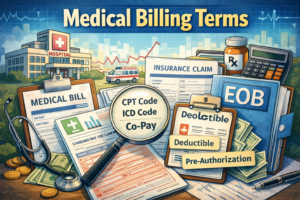
Medical Billing Terms