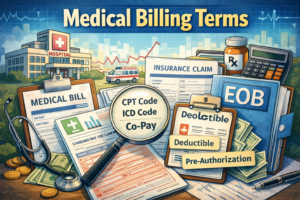
In today’s healthcare system, medical billing serves as the financial backbone connecting patients, providers, and insurance companies. It ensures that healthcare professionals are properly compensated for their services while maintaining transparency and compliance within the system.
What Is Medical Billing?
Medical billing is the process of translating healthcare services into standardized billing claims. After a patient receives care, details such as diagnoses and treatments are documented and converted into medical codes. These codes are then submitted to insurance companies to request reimbursement for the services rendered.
In short, medical billing transforms medical reports into financial transactions — turning care into compensation.
The Medical Billing Process
The billing cycle includes several essential steps:
- Patient Registration: Collecting patient information and verifying insurance coverage.
- Medical Coding: Assigning accurate codes for diagnoses and treatments.
- Claim Submission: Sending coded claims to the appropriate insurance payer.
- Claim Management: Tracking, correcting, or resubmitting claims as needed.
- Payment Posting: Recording reimbursements and resolving unpaid balances.
Each step requires accuracy, compliance, and communication to ensure smooth cash flow and minimal claim denials.
Why Medical Billing Matters
Efficient medical billing is more than paperwork — it’s a critical part of keeping healthcare organizations financially healthy. Accurate billing prevents payment delays, reduces errors, and helps practices remain compliant with healthcare regulations.
💬 “Strong foundations lead to seamless billing and sustainable care.”
The Role of Technology
Modern medical billing relies on automated systems and billing software to improve speed and accuracy. These tools streamline processes, flag potential issues, and provide analytics for better financial performance. As healthcare evolves, adopting digital billing solutions has become essential for efficiency and compliance.
Conclusion
Mastering the basics of medical billing is essential for every healthcare professional and organization. A well-organized billing process supports timely payments, reduces administrative stress, and helps providers focus on what truly matters — delivering quality patient care.